
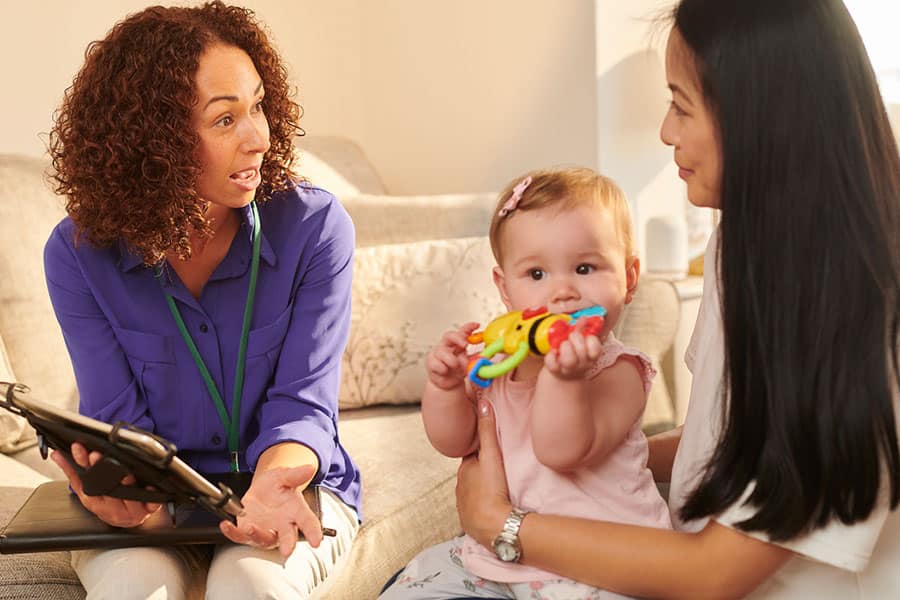
When thinking of mental health, you may think that only teens and adults experience challenges. But the truth is, infants can also struggle with similar challenges.
Infant mental health can often be overlooked; however, it is a key piece of early childhood development. In fact, emotional challenges can start in infancy.
Babies use crying, feeding habits, sleeping habits and behavior to communicate in response to their surroundings. And when something is not right, parents and other family members and caregivers may notice right away.
This could be an indicator that early intervention could help.
Read more below.
Support for babies and families
Ann Arbor Therapy & Testing has deep experience with early mental health intervention, and we understand that this type of support can make a tremendous impact in both the life of the infant and the family.
With a staff of caring and experienced clinicians, our treatment plans are customized and personalized to your individual needs and involve evidence-backed therapy methods.
When it comes to infant mental health, we know it can be a challenge for families to navigate. That is why we are here to help to encourage strong emotional development for your child.
Infants with mental health struggles may display:
- Excessive crying
- Sleep disturbance
- Difficulty calming themselves
- Eating issues
- Bonding challenges
- Clinginess
- Minimal social engagement
- Delayed development
- And more
What’s important to note is that an infant’s brain is very adaptable in early years. This means that early intervention can be impactful.
During critical development time, our therapists and parents and caregivers can work as a team to help build healthy coping skills, emotional regulation and more.
With an approach that is family-centered, treatment plans for infants focus on bonding, healthy routines, strategies for stress management and calming, as well as other techniques.
Adjusting to a new baby can be challenging both for families and for the infant. And we are here to help lead the way with evidence-backed options you can use long after you leave our office.
Using a combination of Cognitive Behavioral Therapy, along with other therapy methods, we can help create meaningful change and a smoother path forward for you and your child.
A consultation can help determine if you and your baby could benefit from therapy.
Compassionate support for the whole family
If your infant is expressing signs of mental distress, it is key to trust your instincts. And you may want to consider therapy.
Having a baby can be the biggest joy in life and we want you to experience it as stress-free as possible.
If you notice that your infant is delayed or distressed, asking for help is one of the strongest things you can do.
Gaining practical tools and resources for positive coping for both you and your baby can be lifechanging and set the stage for a healthier future for your family.
If you are concerned about your baby’s sleep habits, eating habits and overall wellness, we invite you to contact us to learn more.